
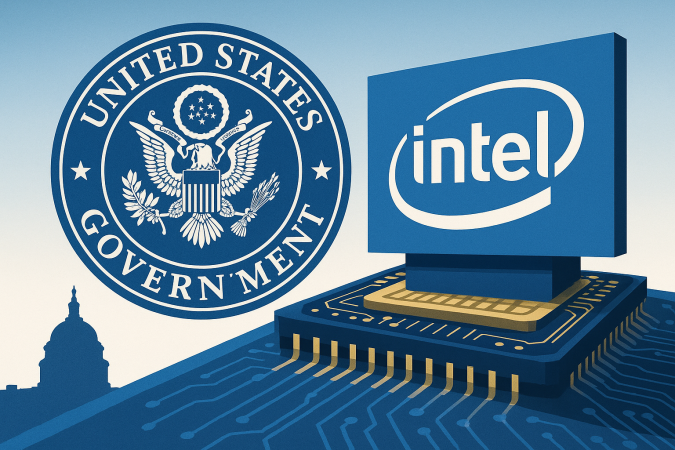
Washington — The United States government is weighing the possibility of taking an equity stake in Intel, a move that would mark a significant shift in its industrial policy approach. Reports suggest that part of the funding originally promised to the company under the CHIPS Act could be converted into shares, potentially giving the government around a ten percent nonvoting interest in the chipmaker.
The idea is being presented as a way to ensure taxpayer money invested in the semiconductor industry delivers direct returns, while also strengthening domestic chip production at a time of heightened global competition. Unlike traditional subsidies or grants, this arrangement would position the government as a shareholder, though without decision-making power in Intel’s operations.
Talks are understood to be ongoing, with details such as valuation, structure, and timing still being finalized. While proponents see this as a smart way to align public and private interests, critics have raised concerns that government involvement in ownership could complicate corporate governance and unsettle existing investors.
The strategy is not limited to Intel alone. Officials have also indicated that similar equity-based deals may be considered with other major semiconductor firms that have received U.S. funding support, including both domestic and international companies with operations in the United States.
Market reaction has been cautious but notable. Intel’s stock gained momentum on speculation that government backing would provide stability, although analysts have warned of possible risks, including inflated valuations and long-term pressure on returns.
Supporters argue that if public money is being used to build critical industries, the public should also share in the upside. Detractors counter that the government’s role should stop at regulation and support, not partial ownership of private companies.
The CHIPS Act, originally intended to revitalize semiconductor manufacturing in America, has already steered billions of dollars toward new plants and research efforts. By tying some of that investment to ownership stakes, the government appears to be signaling a more active role in ensuring the long-term success and accountability of the industry.